Ulysses
“To my Dear Son Leopold”,
“Who ever anywhere will read these written words?”
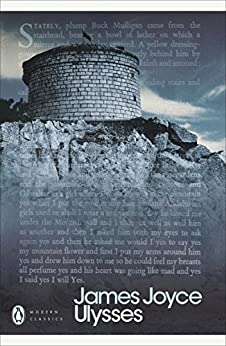
In this report, compiled so as to be as concise and interesting as possible, I synthesise my own views on James Joyce’s, ‘Ulysses’, with those from Harry Blamires’, ‘The New Bloomsday Book: A Guide Through Ulysses’ (3rd Ed.); and those contained in Nabokov’s, ‘Lectures on Literature’.
Ulysses
10/10
The difficulty with which this text is often regarded is not without reason. Indeed, Blamires describes it as formidable, but maintains that it is remarkable, “a great universal masterpiece”, and “the major imaginative work in English prose of the present century” [1900s]. Perhaps one reason as to why the novel is considered so difficult is its utilisation of the stream-of-consciousness device which Nabokov claims more demands greater “attention and sympathy” of readers than “an ordinary description” would.
As Joyce himself said, via the introduction to the Penguin Modern Classics version, “The thought of Ulysses is very simple, it is only the method which is difficult”.
The structure employed by the novel is fascinating and original. Each of the eighteen chapters, or episodes, of the book correspond thematically, to varying degrees, to Homer’s, ‘Odyssey’.
The novel’s style is more difficult to pin down and Joyce has employed radically divergent approaches in the construction of each of the eighteen chapters. Notable examples are, Chapter/Episode 7, Aeolus, a parody of journalism and journalist descriptions; Chapter/Episode 13, Nausicaa, a “parody of feminine magazines and of commercial English prose” (Nabokov); Chapter/Episode 14, Oxen of the Sun, which “parodies… English prose from Anglo-Saxon down to modern slang” (Nabokov); and Chapter/Episode 15, Circe, which imitates a script, complete with stage directions.
My favourite chapter is 11, ‘Sirens’, which is described by Blamires as an “elaborate attempt to imitate musical form in words”. An example being, “In cups of rocks it slops: flop, slop, slap: bounded in barrels. And, spent, its speech ceases. It flows purling, widely flowing, floating foampool, flower unfurling.” Bloom thinks, “Sea, wind, leaves, thunder, waters, cows lowing, the cattle market, cocks, hens don’t crow, snakes hissss. There’s music everywhere”. Further, this chapter contains “lines and phrases taken from opera and operetta popular at the time, from Victorian and Edwardian drawing-room ballads, from music-hall favourites and from traditional songs” (Blamires). It was great fun to listen to each of the pieces referred to on Spotify as I progressed through this chapter and reflect on “mysterious nature of music, rooted as it is in mathematics” (Blamires), considered by Bloom (He invents a new word here, “Musemathematics”). In fact, listening to named tracks as they appeared, such as ‘Qui sdegno’ from ‘The Magic Flute’, really enhanced my appreciation and enjoyment of the novel.
Though not part of the ‘Sirens’ episode, part of the following passage sounded, to me, like rap, “premonitions and perturbations, a clattered milk-can, a postman’s double knock, a paper read, reread while lathering, relathering the same spot, a shock, a shoot, with thought of aught he sought though fraught with nought might cause a faster rate of shaving”.
Despite the novel’s innovative structural and stylistic framework, Blamires argues that it is “neither freakish nor inordinately experimental”, citing other texts by Spenser, Milton, and Shakespeare, that existed at the time of its publication.
But is ‘Ulysses’ the greatest novel ever written in English?
On this matter, I agree with literary critics and internationally respected authors. Its innovativeness and uniqueness, deep exploration of characters, fearlessness in examining uncomfortable themes, reincorporation of ideas and phrases, and the symbolism and connectedness of its individual moments, mean that, in my view, it is the greatest novel ever written.
The Penguin Modern Classics introduction claims that it appears to “exhaust the possibilities of literature” and is the “book to end all books”. I agree.
The thrust of the novel, according to Blamires, is that man’s “day-by-day disappointments or successes are on a par with the large-scale disappointments or successes of epic heroes or nations” and that the parallels made throughout the text give a weight and universality “to human experience at the commonplace level”. It achieves this lofty ambition through its incredible use of language in describing the thoughts and wanderings of its characters around Dublin on the 16th, and for some of the 17th, of June, 1904.
[Fun Bonus Fact: According to Richard Kain via Nabokov, the 16th of June was chosen by Joyce as it was the date on which he met his future wife, Nora Barnacle. Romantic.]
Though one might expect the novel to be hung up exclusively on the details of events in its character’s experience of this day, its scope is much broader than that. When Bloom goes outside to say goodbye to Stephen when he is leaving, the text reads:
“Were there obverse meditations of involution increasingly less vast?
Of the eons of geological periods recorded in the stratifications of the earth: of the myriad minute entomological organic existences concealed in cavities of the earth, beneath removable stones, in hives and mounds, of microbes, germs, bacteria, bacilli, spermatozoa: of the incalculable trillions of billions of millions of imperceptible molecules contained by cohesion of molecular affinity in a single pinhead: of the universe of human serum constellated with red and white bodies, themselves universes of void space constellated with other bodies, each, in continuity, its universe of divisible component bodies of which each was again divisible in divisions of redivisible component bodies, dividends and divisors ever diminishing without actual division till, if the progress were carried far enough, nought nowhere was never reached”.
More impressively, this novel is not afraid of asking some very big questions. One example being, is history moving towards some great goal or is it destined to repeat itself? At various points, support appears to be given to each side of this debate.
Ultimately, the novel fails to present any neat or definite conclusion for any of the questions, topics, or themes that it raises. In the view of Blamires, Joyce allows “the untidiness of our world” to remain with “its loose ends of problems unsolved and mysteries that defy the understanding”.
The novel’s focal character, Leopold Bloom, is drawn as a universal character who, in the words of Blamires, senses “the unreality of things” and searches for identity in the face of “fluidity and change” and “unstable relative viewpoints”. It is said that, “There’s a touch of the artist about old Bloom” and this makes him more appealing and relatable to readers.
According to Blamires, Blooms’ interests can be categorised under the headings, “the sensualaesthetic, the commercial, and the scientific”.
Under the commercial heading, his interest in advertising and marketing reminded me of my own. At several points, Bloom considers the possibilities of modern advertising and considers the importance of the “force, clarity, and simplicity of impact” of advertisements (Blamires). Indeed, he can’t resist noticing or commenting on advertising. When overhearing the ending of a mass while walking near the beach, he thinks, “Mass seems to be over. Could hear them all at it. Pray for us. And pray for us. And pray for us. Good idea the repetition. Same thing with ads. Buy from us. And buy from us”. This reminded me of ‘Home Store and More’ advertisements. Their repetition should be singled out for praise. Further, at several points in the novel, Bloom criticises the placement of an advertisement for Plumtrees Potted Meats, below the obituary notices in the paper.
Comedically, Bloom is similar to Dr. Michael Greger in that he carries a potato around with him in his pocket. However, while to Dr. Greger the potato is usually of the sweet variety and a snack, to Bloom, it is “a mascot” or “a talisman” (Nabokov) and not consumed.
Bloom is kind and compassionate which, too, increases his likeability. Nabokov says that “kindness to animals… [and] to the weak” is one of his “main characteristics”.
In the course of the novel, he donates money to orphans, feeds some hungry seagulls, assists a blind gentleman with crossing a road, recalls an instance where he brought a dog with a lame paw home for the night, feels sympathy for the old nags outside the cabman’s shelter, and attempts to help Stephen materially without causing him embarrassment. In the morning, he cares for and watches his cat with curiosity and joy. When he passes a horse dragging a sweeper behind it, he wishes that the had a lump of sugar for it.
His empathy for and kindness to animals can be seen when he gives his cat milk and observes her in the morning. “They call them stupid. They understand what we say better than we understand them. She understands all she wants to. Vindictive too. Wonder what I look like to her. Height of a tower? No, she can jump me”.
Though it might be expected, due to these views, that Bloom is a vegetarian, he is not. He recalls that he gave it a go in the past and thought it wasn’t for him. “Only weggebobbles and fruit. Don’t eat a beefsteak. If you do the eyes of that cow will pursue you through all eternity. They say it’s healthier. Wind and watery though. Tried it. Keep you on the run all day. Bad as a bloater. Dreams all night. Why do they call that thing they gave me nutsteak? Nutarians. Fruitarians. To give you the idea you are eating rumpsteak. Absurd. Salty too. They cook in soda. Keep you sitting by the tap all night”.
However, his attitude to vegetarianism changes throughout the day. When seeking some lunch, Bloom initially goes to the Burton Hotel. There he has an awful and painful realisation as he sees others savagely consuming their food and “begins to feel that there is something in vegetarianism” as “Animals suffer in the cause of human carnivorism” (Blamires). He thinks, “After all there’s a lot in that vegetarian fine flavour of things from the earth garlic, of course, it stinks Italian organgrinders crisp of onions, mushrooms truffles. Pain to animal too. Pluck and draw fowl. Wretched brutes there at the cattlemarket waiting for the poleaxe to split their skulls open. Moo. Poor trembling calves”.
The novel does not pull any punches with Bloom and puts him under an intense spotlight through hallucinations and fantasies where his “private guilts and the inescapable guilt of his very humanity are dragged remorselessly… into the dark of night and nightmare” (Blamires).
The central relationship in the novel is that between Bloom and his wife Molly. It is revealed, near the beginning, that Bloom has learned while he is away from the house on the day the story occurs, his wife intends to continue an affair with another man, Hugh ‘Blazes’ Boylan. Bloom is not without blame though and is carrying on a secret romance through the postal service, imagines himself with old flames that he meets and a young girl on the beach, and visits a brothel (referred to as a house of ill-fame), though, on this occasion, he does not utilise their services.
It is clear that Bloom has a deep love for Molly and as the story progresses more information is given on the subject of their marriage and how they have drifted apart over the years. Indeed, it appears that over time they have become “less tolerant of each other’s defects” (Blamires). Incidences are examined, such as the death of their infant son, that elaborate on the relationship and increase its vividness. At one point, when away from her, Bloom laments his “failure as a husband, and he cries to Molly for forgiveness” (Blamires). However, he is reminded that the time where he could have easily re-established himself with Molly has now past.
As the novel progresses, the reader begins to see Molly’s side of things, and attention is given to the odd relationship between Bloom and a servant girl to whom he gave presents and attempted to take advantage. It is clear that Bloom considers Molly intellectually deficient with regard to “literacy, computation, and general knowledge” (Blamires) and has made patronising attempts to remedy these, resulting in her irritation and dissatisfaction with the relationship. Further, Molly is suspicious of him; reckons that he visits prostitutes (“bad enough to get the smell of those painted women off him once or twice I had”); and once caught him covering a letter he was writing to his romantic pen pal, Martha Clifford, with blotting paper. In Molly’s final soliloquy she weighs both Bloom’s good and bad points. She still loves him, not ‘Blazes’ Boylan, and notices that Bloom is “polite to old women… and waiters and beggars too” and is “not proud”. However, it is revealed that she feels neglected and unappreciated by Bloom. She considers him to be unreliable as, whenever things appear to be going well for them, “he puts his foot in it and gets the sack”, losing “successive jobs at Thorn’s, Hely’s, Mr Cuffe’s, and Drimmies” (Blamires). She is concerned he will lose his present job as an advertising canvasser with the Freeman’s Journal, too.
Before Bloom goes to sleep in his bed next to Molly on the morning of the 17th of June, he concludes that Molly’s affair is “neither criminal nor greatly damaging” and “rejects all violent or drastic action”, hoping to either eventually win legal damages, “supersede Boylan by another, or to bring about a separation” (Blamires).
The other major relationship in the text, is the unlikely duo of Bloom and Stephen. According to Blamires, Bloom is of the view that they share a “common enthusiasm for music, a common resistance to religious and political orthodoxies, a common interest in sex”, but due to his limited intelligence, fails to recognise that Stephen has little interest in his philosophy or worldview. Critically, Bloom cannot understand or comprehend Stephen’s “artistic creed… [or] abstruse intellectual theories” (Blamires).
Nabokov says of their similarities, that both men possess “keen eyes and ears, both love music, both notice details such as gestures, colours, sounds”. In the novel, door keys are important to both of them in addition to the prominence of characters that they loathe, recollections of phantoms from their past, feelings of loneliness, and their regard of history as their enemy. Consequently, both are wanders and exiles.
Stephen, in some respects, is an unappealing character. Nabokov says that he is “physically repulsive but intellectually exquisite”. The text emphasises his bad teeth, cowardice, poor manners, and these deficiencies are compounded by how dirty he is. Indeed, Stephen refuses to wash regularly due to his dislike of contact with water, though this is considered by Bloom an “eccentricity of genius” (Blamires). “Yet set against all this is his lofty soaring mind, his enchanting creative imagination, fantastically rich and subtle frame of reference, freedom of spirit, unbending proud integrity and truthfulness, which calls for moral courage, his independence carried to the point of obstinacy” (Nabokov).
I can relate to Stephen in some respects, illustrated by this passage. “Grinding poverty did have that effect and he more than conjectured that, high educational abilities though he possessed, he experienced no little difficulty in making both ends meet”.
Though written in different styles, the standard of the prose in this novel is unparalleled. All the way from that famous introduction:
“Stately, plump Buck Mulligan came from the stairhead, bearing a bowl of lather on which a mirror and a razor lay crossed. A yellow dressing-gown, ungirdled, was sustained gently behind him by the mild morning air. He held the bowl aloft and intoned:
— Introibo ad altare Dei.
Halted, he peered down the dark winding stairs and called up coarsely:
— Come up, Kinch. Come up, you fearful Jesuit”.
…to that famous conclusion:
“and I thought well as well him as another and then I asked him with my eyes to ask again yes and then he asked me would I yes to say yes my mountain flower and first I put my arms around him yes and drew him down to me so he could feel my breasts all perfume yes and his heart was going like mad and yes I said yes I will Yes”. [This passage strongly suggests that Bloom is getting breakfast in bed the following morning.]
Other famous nuggets are when Stephen describes history as a “nightmare from which I am trying to awake”, says that God is “A shout in the street”, or that “A man of genius makes no mistakes. His errors are volitional and are the portals of discovery”.
What about this? “Necessity is that in virtue of which it is impossible that one can be otherwise” or “From the sublime to the ridiculous is but a step”.
It is impossible to recount all notable examples, but the rhythm and technique of some passages and descriptions brought me real joy.
For instance, a “black silk skirt of great amplitude”. So vivid!
“Stephen, an elbow rested on the jagged granite, leaned his palm against his brow and gazed at the fraying edge of his shiny black coat-sleeve. Pain, that was not yet the pain of love, fretted his heart. Silently, in a dream she had come to him after her death, her wasted body within its loose brown graveclothes giving off an odour of wax and rosewood, her breath, that had bent upon him, mute, reproachful, a faint odour of wetted ashes. Across the threadbare cuffedge he saw the sea hailed as a great sweet mother by the wellfed voice beside him”.
However, it must be said, some passages are, intentionally, almost indecipherable:
“Universally that person’s acumen is esteemed very little perceptive concerning whatsoever matters are being held as most profitably by mortals with sapience endowed to be studied who is ignorant of that which the most in doctrine erudite and certainly by reason of that in them high mind’s ornament deserving of veneration constantly maintain when by general consent they affirm that other circumstances being equal by no exterior splendour is the prosperity of a nation more efficaciously asserted than by the measure of how far forward may have progressed the tribute of its solicitude for that proliferent continuance which of evils the original if it be absent when fortunately present constitutes the certain sign of omnipollent nature’s incorrupted benefaction”.
WHAH?
Or are written so as to reflect a specific time and state of mind, such as being out on the sauce, and are also difficult to comprehend:
“Pardon? See him today at a runefal? Chum o yourn passed in his checks? Ludamassy! Pore picanninies! Thou’ll no be telling me thot, Pold veg! Did ums blubble bigsplash crytears cos frien Padney was took off in black bag?”
One of the prevailing themes which could be observed throughout the ‘Family Book Club’ reading list, was anti-Semitism (See Other Reports). Similarly, this is true of the present novel, where the focal character, Leopold Bloom, of Jewish decent, though baptised as a catholic to marry Molly, still regards himself as a Jew and is treated as an outsider and on the receiving end of many racist comments by other characters.
Near the beginning of the novel, when Stephen is speaking with Mr. Deasy, the latter suggests that England “is in the hands of the jews. In all the highest places: her finance, her press. And they are the signs of a nation’s decay. Wherever they gather they eat up the nation’s vital strength”.
In many ways the novel is ahead of its time and subjects arise, in the course of conversations between characters, that remain relevant today. One such discussion considers what should be done during a difficult childbirth, where a choice must be made between the life of the mother and that of the baby. This debate results in criticism of the Catholic church and their influence in societal matters, including contraception.
As this is the final text on the Family Book Club reading list, it is fitting to make connections between it and the others.
In ‘Ulysses’, a terrible explosion is described. “Terrible, terrible! A thousand casualties. And heartrending scenes. Men trampling down women and children. Most brutal thing. What do they say was the cause? Spontaneous combustion: most scandalous revelation”. It is interesting to observe that the phenomenon assigned to it was identical to the reason attributed to the death of Krook in ‘Bleak House’.
In ‘Mansfield Park’, I encountered the word ‘slattern’ for the first time. In this text, I found another word with a similar meaning, ‘streel’.
Another example of a connection, is a disgusting moment when Bloom picks off a piece of his toenail and smells it. “The odour takes him back mentally to childhood” (Blamires) and is reminiscent of ‘involuntary memory’, as exemplified in the famous incident of the madeleine from Proust’s ‘In Search of Lost Time: By Way of Swanns’.
Though an incredible and innovative text, ‘Ulysses’ is not immune to criticism.
A tenor, Mario, mentioned by Bloom, in reality, retired in 1866, meaning that it would be impossible for the latter, born in 1866, to have any memories of his performances (Blamires). According to Blamires, it appears that Bloom recalls two speeches quoted in the Freeman’s Journal newspaper offices for which he was not in attendance. It is stated that a Mrs. Riordan lived with the Dedaluses from 1888 to 1891, a chronology that does not fit in with that from ‘A Portrait of the Artist as a Young Man’ (Blamires). It seems that there is an inconsistency in the text which appears to cite two different dates for when Bloom’s father converted to Catholicism (Blamires).
The introduction to the Penguin Modern Classics version of this novel says that if it “has a single flaw, it is that it may sometimes seem over-plotted and that its ordering mechanisms can appear more real than the characters on whom they are imposed”.
Blamires criticises some of correspondences in the novel with certain subjects or topics as “perhaps too elaborately contrived”, where considerable knowledge of these topics is required by readers to fully appreciate them. Later, he further attacks this device, referring to some instances as “overstretched symbolic networks” and details how a single “associative string” threads together an excessive amount of characters and themes.
Nabokov, too, has some criticism of the novel. He objects to how continuously the minds of narrators in the novel dwell on “disgusting” “physiological things”. He says that this “seems artificial and unnecessary” and limits enjoyment for the squeamish. He also contends that the “verbal side of thought” is exaggerated during sections where the stream-of-consciousness device is deployed. This is because “Man thinks not always in words but also in images” and it is unlikely that Bloom would be continuously talking to himself. Nabokov argues that “Readers are unduly impressed by the stream-of-thought device” and submits that its “is not more ‘realistic’ or more ‘scientific’ than any other”. He regards Chapter 2, Part 4, Aeolus, as a poorly balanced with a weak and unfunny contribution by Stephen, suggesting that readers “may peruse it with a skimming eye”. Of Molly’s final soliloquy, Nabokov says she has a “quite abnormal capacity of reviewing her whole life in an uninterrupted inner verbal flow” which is highly unrealistic.
One point relating to the novel where Blamires and Nabokov disagree, concerns the insertion of the author. Though both critics agree that Joyce has inserted himself into the novel, they diverge with regard to how. Blamires says that “Joyce has represented himself in both Bloom and Stephen” while Nabokov argues that Joyce is represented by the mysterious character in the brown Macintosh.
Regardless of how his presence is represented by characters, the introduction to the Penguin Modern Classics edition contends that “The text abounds in ironic self-references”. Indeed, it is stated by a Quaker librarian that “Our national epic has yet to be written”. It can be reasoned that Joyce was submitting this great work as a contender for this title.
New Ross, for some peculiar reason, frequently appears in this novel. A recollection is made by Tom Kernan about a ballad on the topic of the Battle of New Ross during the 1798 uprising and another tune, ‘The Croppy Boy’, contains the lyrics, “At the siege of Ross did my father fall”. Reference is made too, to the “ivory raised point from the Carmelite convent in New Ross, nothing like it in the whole wide world!”
Finally, a characters “grandfather, Patrick Michael Corky, of New Ross, had married the widow of a publican there whose maiden name had been Katherine (also) Talbot. Rumour had it, though not proved, that she descended from the house of the Lords Talbot de Mala-hide”.
There were a couple of tearful moments in the novel. An example is when Stephen’s sister Dilly buys a book for a penny to help her learn French. This is “In the midst of all the meanness and squalor and misery of the girls’ life with their father” (Blamires) who seems to always have enough money for booze. “He [Stephen] took the coverless book from her [Dilly’s] hand. Chardenal’s French primer.
—What did you buy that for? he asked. To learn French?
She nodded, reddening and closing tight her lips. Show no surprise. Quite natural.
— Here, Stephen said. It’s all right. Mind Maggy doesn’t pawn it on you. I suppose all my books are gone.
— Some, Dilly said. We had to.
She is drowning. Agenbite. Save her. Agenbite. All against us. She will drown me with her, eyes and hair. Lank coils of seaweed hair around me, my heart, my soul. Salt green death”.
Additionally, my heart ached for Bloom as he ended his letter to Martha Clifford, his romantic pen pal, “PPS, I feel so sad today, so lonely”.
There were several notable burns.
“God, these bloody English. Bursting with money and indigestion”. There is an alleged burn where, supposedly, according to ‘Voyages in China’, “the Chinese say a white man smells like a corpse”. There is a burn on America too, “What is it? The sweepings of every country including our own. Isn’t that true? That’s a fact”.
Myles Crawford says to Professor McHugh, “Getououthat, you bloody old pedagogue!”
When a tramcar obstructs his view of a stockinged lady getting into her carriage, Bloom says, “Curse your noisy pugnose”.
Mr. Dedalus says of Buck Mulligan that he is “a contaminated bloody doubledyed ruffian by all accounts… [and] His name stinks all over Dublin”. Later, he describes Reuben J as a “confirmed bloody hobbledehoy”.
Bloom considers a horse as a “big foolish nervous noodly kind of a horse” and asks at the funeral, “who is that lankylooking galoot over there in the macintosh?” [James Joyce! According to Nabokov].
“lord Harry called farmer Nicholas all the old Nicks in the world and an old whoremaster that kept seven trulls in his house”.
I’m not certain who is the source of, or at the receiving end, of this burn, or what it truly means, but it occurred whilst drinking. “Come on, you winefizzling ginsizzling booseguzzling existences! Come on, you doggone, bullnecked, beetlebrowed, hogjowled, peanut-brained, weaseleyed fourflushers, false alarms and excess baggage!”
There are many comedic instances peppered throughout the book.
When preparing breakfast, “Buck Mulligan, hewing thick slices from the loaf, said in an old woman’s wheedling voice:
—When I makes tea I makes tea, as old mother Grogan said. And when I makes water I makes water”.
Or:
“Dead! says Alf. He is no more dead than you are.
—Maybe so, says Joe. They took the liberty of burying him this morning anyhow”.
When Molly is considering the purchase of new clothes and corsets to control her figure, she thinks that perhaps she could slim down by cutting out stout for dinner.
On alcoholism, another passage describes “Two fellows that would suck whisky off a sore leg”.
Bloom lies to Molly about how he spent his day, claiming that he went to the Gaiety Theatre. I’d lie and say I hadn’t been the Gaiety!
Murphy, the old seadog, reminded me of Nanny. “It’s them black lads I objects to. I hate those buggers. Sucks your blood dry, they does”. She’s still hung up on when a taxi driver charged her €6 instead of €5 to go to Dunnes 8 years ago.
Bloom, with his entrepreneurial mind, develops an idea for a new business. “A scheme for the development of Irish tourist traffic in and around Dublin by means of petrolpropelled riverboats, plying in the fluvial fairway… [10/- per person per day, guide (trilingual) included]”. Sounds a lot like the Viking Splash tours to me.
During her soliloquy, Molly recalls a humiliating misunderstanding that she made in confession when young and inexperienced. “then I hate that confession when I used to go to Father Corrigan he touched me father and what harm if he did where and I said on the canal bank like a fool but whereabouts on your person my child”. She also thinks, “itd be much better for the world to be governed by the women in it you wouldnt see women going and killing one another and slaughtering when do you ever see women rolling around drunk like they do or gambling every penny they have and losing it on horses yes because a woman whatever she does she knows where to stop”. I’ve got some bad news for you, Molly. Times have changed!
Finally, when Bloom inspects his own library before bed, he reflects on the “the deficient appreciation of literature possessed by females”. Sorry, ladies!
Many pieces of literature are cited or are referred to in the course of this novel that served as prompts for my own reading. ‘The Moonstone’ by Wilkie Collins or ‘Moll Flanders’ by Daniel Defoe, for instance. Another of these is a novel being read at work by a Miss Dunne, a secretary. However, she temporarily abandons Wilkie Collins’, ‘The Woman in White’, as there is “Too much mystery business in it. Is he in love with that one, Marion? Change it and get another”.
Too much mystery?. I’ll be the judge of that.
Each year on the 16th of June, Dublin is host to Bloomsday, a celebration of the life and work of James Joyce. As part of this, there are tours that adhere, to varying extents, to the fictional experiences of Leopold Bloom on this day. Considering the food and drink consumed by Bloom, tours of this type would have very little to offer me. Specifically, he begins the day with a pig’s kidney and follows this up with a gorgonzola sandwich, a glass of burgundy, liver, bacon, cider, beer, sardines, chocolate, and purchases a pig’s crubeen and sheep’s trotter (though these are fed to a dog).
It is my hope that you found any reports that you read, arising from the Family Book Club/Nabokov Project, informative, entertaining, and, perhaps, thought-provoking.
“MILLY.
P.S. Excuse bad writing, am in a hurry.
Byby.
M”.