Madame Bovary
Dear Both,
Please see below for a brief report on another excellent text in ‘Family Book Club’.
Madame Bovary
9/10
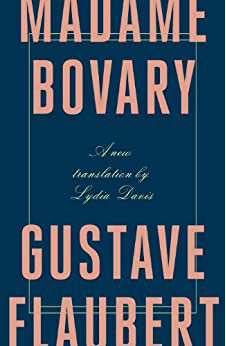
To commence this report, I want to praise the version that I read, Penguin Modern Classics, Lydia Davis. Not only was its introduction insightful, citing Nabokov and his views on the novel, but it also adhered to his recommendations with regard to the translation of certain passages. This brief email weaves together these sources, Thug Notes, and my own observations.
Some background information, obtained from Davis, signalled the care and attention that was dedicated to the composition of this text. She describes Flaubert as an author that “produces very few finished pages” as he disregards much of what he writes and “prunes back severely” that which he retains. As a result, it could be calculated from letters he wrote at the time, his output was approximately between one and four pages per week, “thirteen pages in three months”, or “ninety pages in a year”. Though ‘Madame Bovary’ was commenced in September, 1851, it was not published until October, 1856. Nabokov agrees with the admirable level of perfectionism employed and commends the style of the novel saying, “Stylistically it is prose doing what poetry is supposed to do”. Further, he adds that it is “artistically modulated and balanced. This is style. This is art”.
Davis says of the eponymous Madame Bovary that she is “infatuated with romanticism, [and] comes to grief because of it—because of her craving for impossible dreams, her refusal to accept the ordinariness of her life and its limited possibilities for happiness”. These themes appear throughout the text. On romanticism, Sparky Sweets, PhD, says that “married life ain’t was Emma was ‘spectin’”. “Before her marriage, she had believed that what she was experiencing was love; but since the happiness that should have resulted from that love had not come, she thought she must have been mistaken. And Emma tried to find out just what was meant, in life, by the words ‘bliss’, ‘passion’, and ‘intoxication’, which had seemed so beautiful to her in books”. Rodolphe, prior to his seduction, describes her as “gasping for love like a carp for water on a kitchen table”. What is noteworthy is her rejection of ordinariness. “…she knew the country too well; she knew the bleating flocks, the milking, the plows. Accustomed to the calm aspects of things, she turned, instead, toward the more tumultuous. She loved the sea only for its storms, and greenery only when it grew up here and there among ruins. She needed to derive from things a sort of personal gain; and she rejected as useless everything that did not contribute to the immediate gratification of her heart,—being by temperament more sentimental than artistic, in search of emotions and not landscapes”.
Nabokov says, “A romantic person, mentally and emotionally living in the unreal, is profound or shallow depending on the quality of his or her mind. Emma Bovary is intelligent, sensitive, comparatively well educated, but she has a shallow mind: her charm, beauty, and refinement do not preclude a fatal streak of philistinism in her. Her exotic daydreams do not prevent her from being small-town bourgeois at heart, clinging to conventional ideas or committing this or that conventional violation of the conventional, adultery being a most conventional way to rise above the conventional; and her passion for luxury does not prevent her from revealing once or twice what Flaubert terms a peasant hardness, a strain of rustic practicality”.
Initially, to satiate this desire for tumult, novels are enough, and she soils “her hands with the greasy dust of… old lending libraries”. Though Danielle Steele, the greatest living author, was not around, she was able to locate an abundance of stories that “were always and only about love, lovers, paramours, persecuted ladies fainting in lonely pavilions, postilions killed at every stage, horses ridden to death on every page, gloomy forests, troubled hearts, oaths, sobs, tears, and kisses, skiffs by moonlight, nightingales in groves, gentlemen brave as lions, gentle as lambs, virtuous as no one ever is, always well dressed, and weeping like tombstone urns”.
Emma is not the only character that has a love of reading. In a conversation on that the very subject, Léon says, “You forget everything,… and hours go by. Without moving, you walk through lands you imagine you can see, and your thoughts, weaving in and out of the story, delight in the details or follow the outlines of the adventures. You merge with the character; you think you’re the one whose heart is beating so hard within the clothes he’s wearing”.
Nabokov says that Emma “reads books emotionally, in a shallow juvenile manner, putting herself in this or that female character’s place”. If that’s the case, I, too, read books ‘emotionally’ and in a ‘juvenile manner’. Like Léon, I ‘merge with the character’ and get swept up in their story and reality.
Though Emma is reading profusely, her vocabulary and opportunities to explain her dissatisfaction and discontentment are limited. “…how does one express an uneasiness so intangible, one that changes shape like a cloud, that changes direction like the wind? She lacked the words, the occasion, the courage”.
Perhaps Charles’ mother’s diagnosis was correct? “’Do you know what your wife needs?’ Mère Bovary went on. ‘She needs to be forced to work, to work with her hands! If she was obliged to earn her living, like so many others, she wouldn’t be having these vapors—they come from all the ideas she stuffs her head with, and her idle life’”.
An argument could be assembled from the text that Emma is bipolar. One passage that appears to support this states that “Because her moods were so various, by turns mystical and joyful, garrulous, taciturn, fiery, casual, she woke in [Léon] a thousand desires, stirring his instincts or his memories. She was the beloved of every novel, the heroine of every drama, the vague she of every volume of poetry”.
Even towards the beginning of Emma and Charles’ relationship, she begins to feel bitter towards him, as he, being somewhat oblivious, believes that she is happy too. The text says, “she resented him for that settled calm, that ponderous serenity, that very happiness which she herself brought him”. Charles has a genuine, deep love for Emma, evidenced in a passage after he learns she is pregnant where, “he contemplated her at his ease, as she sat tired in her armchair, his happiness could no longer be contained; he would stand up, he would kiss her, run his hands over her face, call her ‘little mama’, try to get her to dance, and, half laughing, half crying, babble all sorts of fond pleasantries that came into his head. The idea of having engendered a child delighted him. Nothing was lacking to him now”. What a sweet and sincere moment.
Sparky Sweets, PhD, says “that girl got an itch that Charlie just can’t scratch”. He later adds that the text questions whether our dreams are so misleading that “we can’t see the decent life in front of us?”. On their relationship, Nabokov says, “the love Charles almost unwittingly develops for Emma is a real feeling, deep and true, in absolute contrast to the brutal or frivolous emotions experienced by Rodolphe and Léon, her smug and vulgar lovers”. Tragically, Charles dies one year after Emma, aged thirty-two.
Ultimately, Emma wishes her life away without ever appreciating what she has. “How happy those days had been! How free! How full of hope! How rich in illusions! There were none left now! She had spent them in all the different adventures of her soul, in all those successive stages she had gone through, in her virginity, her marriage, and her love; —losing them continuously as her life went on, like a traveller who leaves some part of his wealth at every inn along his road”. To my mind, this aligns with recent prevalence of mindfulness and being present. Being grateful for small pleasures and appreciating the smaller moments of which life is composed is central to happiness. Living either in the past or the future, like Emma, is recipe for disaster.
Not only does Emma negatively contrast her own situation to the fabulously wealthy, she manages to obtain the same outcome when doing so with her old school friends. “What were they doing now? In town, with the noise of the streets, the buzz of the theaters, and the lights of the ballroom, they were living lives where the heart expands, the senses blossom. But her life was as cold as a garret whose dormer-window looks on the north, and boredom, the silent spider, was darkly weaving its web in every nook of her heart”.
Emma was destined never to be happy as “Every smile hid a yawn of boredom, every joy a malediction, every pleasure its own disgust, and the sweetest kisses left on your lips no more than a vain longing for a more sublime pleasure”.
Rodolphe Boulanger is an interesting character as he is vastly more experienced than Emma with the opposite sex. Indeed, his seduction of her is very cynical and cunning as he admits that she is beautiful and could be his “[w]ith three pretty compliments”, but questions “how to get rid” of her afterwards. In a beautiful passage, where he attempts to overcome Emma’s objections to their affair, he argues that there are “two moralities”. “The petty one, the conventional one [conventions at the time], the one devised by men, that keeps changing and bellows so loudly, making a commotion down here among us, in a perfectly pedestrian way, like that gathering of imbeciles you see out there. But the other one, the eternal one, is all around and above us, like the landscape that surrounds us and the blue sky that gives us light”. His contention is that their desire for one another must take precedence against temporary, transient cultural norms. One must concede that this is a convincing and effective argument to poor, vulnerable Emma.
Eventually, he tires of Emma. “He had heard these things said to him so often that for him there was nothing original about them. Emma was like all other mistresses; and the charm of novelty, slipping off gradually like a piece of clothing, revealed in its nakedness the eternal monotony of passion, which always assumes the same forms and uses the same language”. Again, a fascinating notion here is that he has had various similar relationships to that with Emma and these iterations have begun to feel similar in many respects. Emma discovers this similarity herself later in the text, where it states she “was rediscovering in adultery all the platitudes of marriage”.
While Rodolphe is an objectionable character in many respects, I do agree with him when he states, “I can’t assume responsibility for a child”, referring to Berthe. It was his mistake to get involved romantically with somebody who had a child from an existing relationship in the first place.
The book has some interesting things to say about gender. Emma hopes that her firstborn will be a son and contrasts men and women at the time of the story. She concludes that, “man, at least, is free; he can explore every passion, every land, overcome obstacles, taste the most distant pleasures. But a woman is continually thwarted. Inert and pliant at the same time, she must struggle against both the softness of her flesh and subjection to the law. Her will, like the veil tied to her hat by a string, flutters with every breeze; there is always some desire luring her on, some convention holding her back”.
This prevailing attitude towards women is substantiated further by Homais when he says of his wife’s reaction to Léon moving to Paris, “Women, you know—the least little thing troubles them! Especially my wife! And one would be wrong to oppose it, since their nervous systems are much more impressionable than ours”.
There were countless examples of excellent writing and interesting ideas that I flagged in this book, but as not all could be included for the sake of brevity, a selection are reproduced below.
“A breath of love had passed among the stitches of the canvas; each stroke of the needle had fastened into it a hope or a memory, and all those interlaced threads of silk were merely an extension of the same silent passion”.
It is interesting to observe the contrast in Emma’s mind between her life and that of the Marquis d’Andervilliers and his circle. “Theirs was a life elevated above others, between heaven and earth, among the storm clouds, something sublime. As for the rest of the world, it was lost, without any exact place, as though it did not exist. The closer things were to her, anyway, the more her thoughts shrank from them. Everything that immediately surrounded her—the tiresome countryside, the idiotic petits bourgeois, the mediocrity of life—seemed to her an exception in the world, a particular happenstance in which she was caught, while beyond, as far as the eye could see, extended the immense land of felicity and passion”. What an effective deployment of rich language to illustrate the envy that Emma has of those she perceives as having a far better life than her.
It is written of Léon, after he initially abandons the idea that he will ever be with Emma, that “he was placing her in an extraordinary situation. She was divested, in his eyes, of the fleshly attributes from which he had nothing to hope for; and in his heart, she rose higher and higher, withdrawing further from him in a magnificent, soaring apotheosis”. Such transcendent language.
The novel gorgeously describes the diminishing of love over time. “Little by little, love was extinguished by absence, longing smothered by routine; and the incendiary glow that had reddened her pale sky was covered over in shadow and by degrees faded away”.
When Rodolphe is seducing Emma, the text says, it is “the first time [she] had heard such things said to her; and her pride, like a person relaxing in a steam bath, stretched out languidly in the warmth of the words”. One can almost feel the bliss of basking these declarations of love.
“After a person dies, a sort of stupefaction settles in, always, so difficult is it to comprehend this sudden advent of nothingness and to resign oneself to believing in it. But when he saw how still she was, Charles threw himself on her crying: ‘Goodbye! Goodbye!’”. This is moving stuff. Death is so unreal to the living.
Nabokov does have some criticisms with regard to how real the novel is, commenting on some of its implausible aspects. A “novel in which a young and healthy husband night after night never wakes to find the better half of his bed empty; never hears the sand and pebbles thrown at the shutters by a lover; never receives an anonymous letter from some local busybody; A novel in which the biggest busybody of them all, Homais—Monsieur Homais, whom we might have expected to have kept a statistical eye upon all the cuckolds of his beloved Yonville, actually never notices, never learns anything about Emma’s affairs; A novel in which little Justin—a nervous young boy of fourteen who faints at the sight of blood and smashes crockery out of sheer nervousness—should go to weep in the dead of night (where?) in a cemetery on the grave of a woman whose ghost might come to reproach him for not having refused to give her the key to death; A novel in which a young woman who has not been riding for several years—if indeed she ever did ride when she lived on her father’s farm—now gallops away to the woods with perfect poise, and never feels any stiffness in the joints afterwards; A novel in which many other implausible details abound—such as the very implausible naiveté of a certain cabdriver—such a novel has been called a landmark of so-called realism, whatever that is. In point of fact, all fiction is fiction. All art is deception. Flaubert’s world, as all worlds of major writers, is a world of fancy with its own logic, its own conventions, its own coincidences”. It can be concluded that Nabokov is willing to let some unconvincing plot details slide for that style and craft in what he otherwise describes as a masterpiece and a ‘perfect piece of poetical fiction’.
Even though ‘Mein Kampf’ was not included on the ‘Family Book Club’ reading list, this is the second of the three novels completed to date with an anti-Semitic remark, the first being in ‘Bleak House’. In a scene where Emma asks Monsieur Lheureux about prices, he responds “’A trifle’,…’a mere trifle; but there’s no hurry; whenever you like; we’re not Jews!’ She thought for a few moments….”, but does not protest against his blatant racism or terminate their relationship, perhaps indicating that prejudice towards Jews was more acceptable in the past.
The second instance of racism in the text occurs when Homais is describing the ‘characteristics’ of women of different nationalities to Léon. “German women were moody, French women licentious, Italian women passionate. ‘And what about Negro women?’ asked the clerk [Léon]. ‘That’s a taste cultivated by artists’, said Homais”.
Though this an important and well-regarded novel, that does not mean it is humourless. Some examples are:
When Charles Bovary’s mother comes to visit him and his first wife. “…after a few days, it would seem that the daughter in-law had sharpened her mother-in-law against her own hard edge; and then, like two knives, they would set about scarifying him [Charles] with their remarks and their observations. He was wrong to eat so much! Why offer a drink to everyone who stopped in? How stubborn not to wear flannel!”.
I thought that it was amusing to read of Lheureux’s success in business. “Everything, moreover, was going well for him. He was the contracting party for supplying cider to the Neufchâtel hospital”. I can only imagine how important a customer a hospital would be with regard to ordering cider.
When Charles and Emma attend the opera, comically the former has no chill and they are chronically early. “Monsieur was very afraid of missing the beginning; and without having had time enough even to swallow a bowl of soup, they arrived at the theater, whose doors were still closed”.
It was very funny, too, when Homais tactfully and considerately breaks the news to her that Charles’ father has died. “’Your father-in-law is dead!’. Indeed, the elder Monsieur Bovary had died two days before, suddenly, from an attack of apoplexy, as he was leaving the table; and out of an excessive concern for Emma’s sensibility, Charles had asked Monsieur Homais to inform her with the greatest tact of this horrible news. The pharmacist had pondered his announcement, he had rounded it, polished it, cadenced it; it was a masterpiece of discretion and transitions, of subtle phrasing and delicacy; but rage had swept away rhetoric”.
This was a book that was relatively light in the burns department. Some notable examples included, that by Homais on Binet, “he has no imagination, no wit, none of those qualities that make a man good company!”; and when the Homais children are described as “dirty little urchins, very badly brought up and somewhat lymphatic, like their mother”.