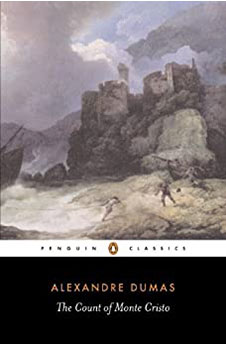
The Count of Monte Cristo
9/10
I loves me count, boi. A shocking, thrilling, compelling, edge-of-your-seat meditation on the limits of justice and the cost of revenge.
Though this novel was not ‘high literature’, my rating is reflective of my enjoyment of it and its many thrills and twists. I must praise my copy of the novel, Penguin Classics, which contained footnotes and annotations that contained all historical and contextual information required for full enjoyment of this book (e.g. it is strongly implied that Eugénie is a lesbian and all literary and artistic references are elaborated). My jaw hit the floor on several occasions, such as when Villefort initially realises that the letter from Elba incriminates his father, Bertuccio finding a living baby in the backyard box, the Cavalcantis being a pair of fakes, the re-emergence of Caderousse in Paris, the slow reveal that Morcerf is Fernand, and the identity of the Villefort poisoner. I want to praise, too, the doubts and soul-searching undertaken by Dantés following the execution of the revenge plan and his consideration of the unintended consequences. Additionally, the description of Edmond seeing his reflection for the first time in 14 years is simply remarkable and I had a tearful moment when Mercédès acknowledges the Count’s true identity and appeals for her son’s life. Some issues I had with the story were how Danglars is introduced as a moustache twirling cartoon baddie, the convenience of Abbé Faria’s seizures, how the Morrel men are obsessed with suicide, the ages of the characters in relation to each other being somewhat inconsistent, the crystal clear memory of anyone who recounts a story from the past, the failed humour of fugitive Andrea coming down Eugénie and Louise d’Armilly’s chimney, and the dull period during which Danglars is held captive by Luigi Vampa in Rome.