The Idiot
3/10
A long-winded, meandering, and unfocused soapbox from which to deliver a banal commentary on the moral state of society.
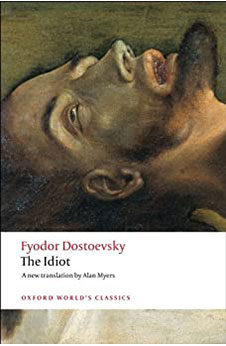
Right out of the gate, I have to praise the quality of the version I read, Oxford World’s Classic. It had some great commentary on the text at the beginning, which I draw on for this terse paragraph, in addition to my old friend ‘Lectures on Russian Literature’ (Nabokov), and footnotes that explained references relating to history, art, politics, and translations of the French passages, that were necessary for its comprehension. Nevertheless, the quality of the edition was not enough to redeem serious deficiencies with the novel. The notes say that Dostoevsky originally regarded this text as “as an artistic failure in which he had wasted a long-cherished idea” and that is a sentiment that I would agree with. A novel with the purpose of providing some social commentary only works when it is compelling, well-crafted, and populated with interesting and likeable characters with whom readers can engage. “To kill for murder is an immeasurably greater evil than the actual crime itself. Judicial murder is immeasurably more horrible than one committed by a robber.”; “Prince, how everybody’s on the make these days! Here I mean, in Russia, in this beloved country of ours. How it all came about, I’ve no idea.” To Dostoevsky I say, we get it. It’s a materialistic society and is devoid of spiritual purpose. Limiting the descriptions of extravagance, coupled with the ‘bidding for Nastasya’s hand’ scene, would have been enough to express this. Upon completion, I can’t say that there is one character that I liked, and many were blatantly used as vehicles for expressing various ideas, in addition to being boring and one-dimensional. According to Nabokov, “All this crazy hash is interspersed with dialogues destined to depict the respective points of view of different circles of society upon such questions as capital punishment or the great mission of the Russian nation”. Though the book begins in such a captivating way on the train with limited characters, introduced magnificently and with great pace and flow, things get out of control when there are 20 distinct people talking in a room or at a party. The scene with Burdovsky’s attempt at claiming the inheritance felt like something out of Jeremy Kyle. Ultimately, I think my favourite parts were when Myshkin is just walking around by himself and ruminating. The worst character of all is Nastasya Filipovna. While there was some interesting stuff in there about the line between love and pity, it did not justify the way the character was written. Nastasya Filipovna is a walking nightmare and multiple time runaway bride. Nobokov describes her as “one of those completely unacceptable, unreal, irritating characters with which Dostoevski’s novels teem”. While I suspected from the beginning of the book that she’d be redeemed in some way throughout the text, the truth is, I think she went more off the rails and became more unlikeable. The book also felt very plot driven, rather than being character driven, a shame for a novel with so many. While “the plot itself is ably developed with many ingenious devices used to prolong the suspense. Some of these devices appear to me, when compared to Tolstoy’s methods, like blows of a club instead of the light touch of an artist’s fingers” (Nabokov). I believe the writing is sub-par. As you know, I’m a fan of beautifully ornamented, flowery prose, but I found this text too dry, repetitive, and overly descriptive. Notes on the text say, “readers are also familiar with Dostoevsky’s solecisms, such as using the word ‘again’ five times in four lines, or ‘suddenly’ six times in ten lines, both examples taken from The Idiot.” Note to self: proofread this terse paragraph to ensure some variation in the language. With regard to the length of the book, I suggest Dostoevsky refer to the words of the prince, “Oh, Lebedev, how tedious this is!… Come to the point, why drag things out?”. What made the text worthwhile was some of the chuckles that I had along the way. The prince’s epilepsy treatment in Switzerland, “involving cold water and gymnastics”; “the one in black was the eldest of the Belokonskaya daughters, an old maid of around 35” – who you callin’ old?; the prince’s hatred of the Roman Catholic Church; and the newspaper article written to smear the prince; were all notable examples.