7/10
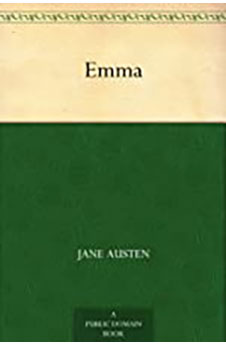
Funny, thought provoking, and perfectly entertaining. Jane Austen really shews the reader a good time.
With regard to the the story itself, it is summarised very early on when it says “the real evils, indeed, of Emma’s situation were the power of having rather too much her own way, and a disposition to think a little too well of herself; these were the disadvantages which threatened alloy to her many enjoyments. The danger, however, was at present so unperceived, that they did not by any means rank as misfortunes with her“. The remainder of the book is simply resolving these issues and Emma learns some hard lessons and really grows as a character.
While Emma is written as flawed, she is also very likable. She is described as “no feeble character“, as having enough sense, energy, and spirits to get her through life’s difficulties, and is good to the poor and sick. George puts it best when he says she is “faultless in spite of all her faults“. However, she is a snob and says the “yeomanry are precisely the order of people with whom” she feels she can “have nothing to do“, (Burn on farmers) and doesn’t want to have any interactions with people that are not ‘good society’. Early on, George Knightley says she will “never submit to anything requiring industry and patience, and a subjection of the fancy to the understanding“. This rings true as she fails to maintain her resolution of practicing piano more to compete with the proficient Jane Fairfax. She is funny too, particularly with her doomed attempts at matchmaking.
The best parts of the book, in my view, were the dramatic confrontations. George Knightley and Emma’s argument about the suitability Mr Martin’s proposal to Harriet and when Emma rejects Mr Eltons’ advances. It was interesting too, to reflect on the jealousies that different characters had of each other. Emma is jealous of the musical abilities possessed by Jane Fairfax and George Kingsley of Frank Churchill for being a perceived love interest of Emma. Frank later remarks on the similarities his and Emma’s journeys saying, “there is a likeness in our destiny; the destiny which bids fair to connect us with two characters so much superior to our own“.
With regard to the comedy: Mr Woodhouse is such a funny character. He has no empathy and can “not believe other people to be different from himself“. He tries to dissuade Mr and Mrs Weston’s wedding guests from eating cake at their wedding; refers to anybody who had exited their daily life or house as ‘poor…’, regardless of what they had going on in their own life; and recounts the views of his friend and doctor, Mr. Perry, to anybody who will listen (not unlike somebody I know and Michael Greger). The book has so many great lines, such as “She wished him very well; but he gave her pain, and his welfare twenty miles off would administer most satisfaction“. Among the funniest gags are are, John Knightley sucking up to Daddy Woodhouse, but not quite being prepared to join him in a bowl of gruel; the Bates and the persistent harping on about Jane Fairfax, apologising at one point that she only wrote them a two page letter which they could read guests; Mrs Elton and her low class, nouveau riche obsession with that dang barouche-landau; Miss Bates as a comedic chatterbox and blabber mouth who at one point tries to keep a secret, but says unluckily she had mentioned it before she was aware; and Emma going from leading Harriet astray in romance to becoming her rival. ‘Blockhead’ must have been the number 1 insult at the time as it is used so often in the book.